We Built a URL Shortener. And this is Why.
April 6, 2026
Sometimes the best way to understand something is to take it apart and put it back together yourself.
That's genuinely why this started. Not a client brief. Not a gap in the market. Just curiosity, some spare time to explore, and the kind of itch that developers will recognise immediately: I wonder how that actually works under the hood.
First, what even is a URL shortener?
You've seen them everywhere. A long, ugly link like yourwebsite.com/blog/article/2024/how-to-do-the-thing-you-wanted becomes something clean like oddb.it/shrtnr. One click, same destination.
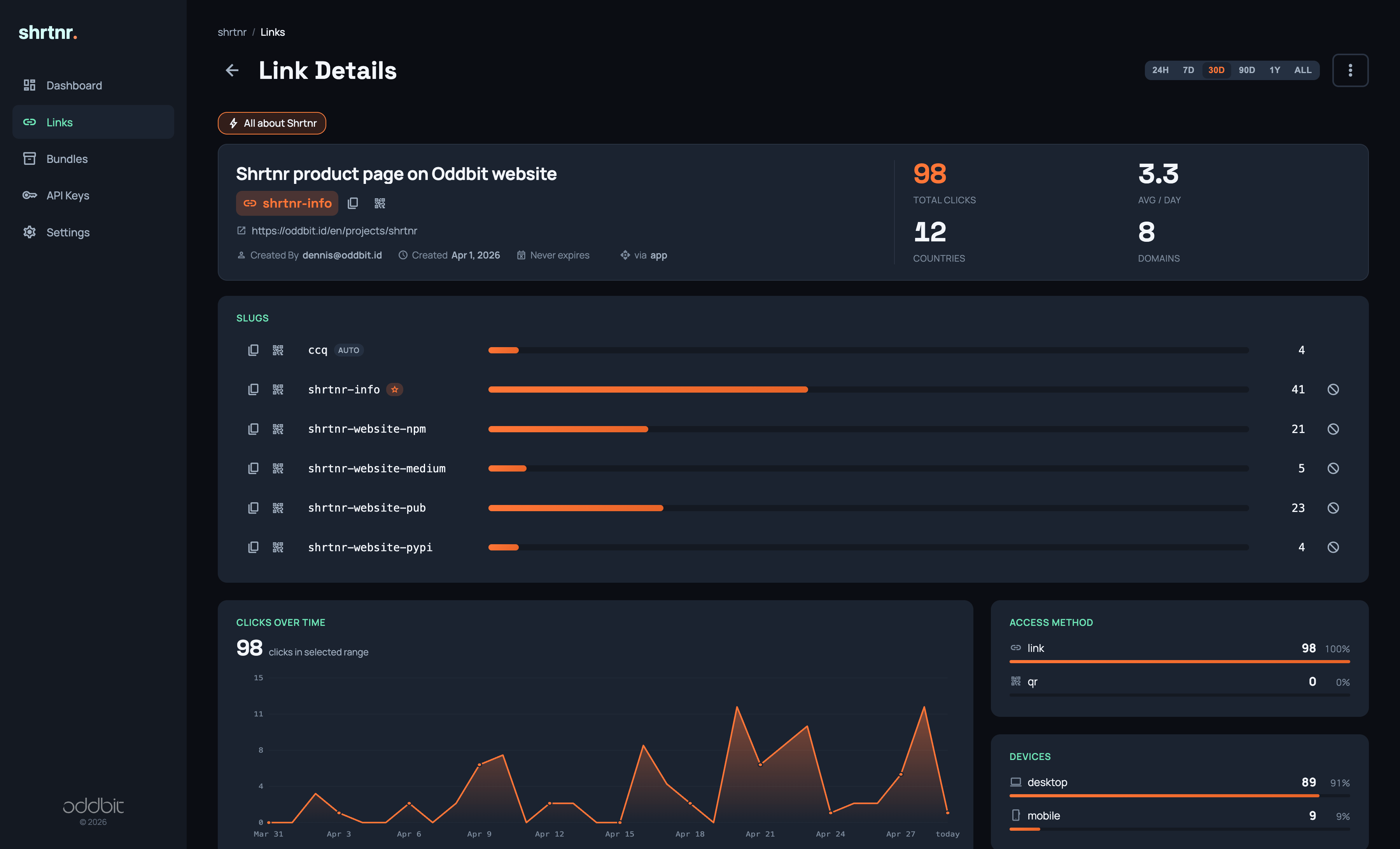
But they are more than a cosmetic trick. A good URL shortener is a branding and marketing tool. Every link you share is an opportunity to put your name on it. oddb.it/shrtnr tells people who sent it before they even click. And behind the scenes, it tells you how people clicked it: which country, which device, which platform sent them your way.
That's real data. And it lives inside every short link you share.

So why build one instead of just using an existing tool?
We looked at what was out there. The paid options are genuinely expensive for what they do. The free and open-source alternatives are solid in many ways, but none of them had the one feature that mattered most to us right now: native integration with AI tools.
We will save the deep technical detail for another post, but the short version is this: our team runs workflows where AI handles a lot of the repetitive creative and publishing work. For that to work smoothly, every tool in the chain needs to be able to talk to each other without a human sitting in the middle clicking buttons. The existing URL shorteners did not support this natively. So we built one that does.
This is actually just how we work
There is a pattern at Oddbit that comes up again and again.
We spot a gap. We say something. And if we have the time and the curiosity, we build the fix ourselves and share it with everyone.
We've done this before with Tanam, a Firebase CMS we built in 2019 that included AI-assisted content drafting. And with our Facebook App Events plugin for Flutter, which started as something we needed for a project and is still actively maintained today.
It's not a charity mission. It's the mindset of people who genuinely like to build things. We fix what's broken, we contribute back, and we treat every codebase we touch as something worth improving. That rule applies whether we're working on client software or our own internal tools.
What we ended up with
The result is Shrtnr, our open-source URL shortener. Full analytics, custom short URLs, QR codes, link expiry: everything you would expect from an expensive paid tool.
And it is genuinely free to run. Not free as in "free tier with limits." Free as in zero cost, self-hosted, running at production scale, globally distributed across hundreds of locations worldwide. The kind of performance that paid services charge serious monthly fees for, available to anyone willing to spend half an hour setting it up. We use it ourselves in production today.
And yes, it talks natively to AI tools. That part works too. We use it in our own content pipeline.
The code is open and available for anyone to use, modify, and build on: oddb.it/shrtnr
What's next
This is the first in a short series of posts where we'll go deeper: how the AI integration actually works, how we made it fast, and what this kind of open-source-first thinking means for the products and platforms we build for clients.
If you're working on something and you'd like a team that builds like this, we'd love to hear about it.